CASE STUDY OVERVIEW
An aerospace exploration company required a custom high-pressure helium booster and control system capable of supporting repeatable propulsion proof testing for a new lunar landing technology application. Existing off-the-shelf systems could not meet the project’s operational, safety and integration requirements, which included high-pressure helium regulation up to 15,000 PSI (pounds per square inch), manual and remote operation capability, integrated controls and mobile packaging suitable for an aerospace testing environment.
Pneumatic & Hydraulic Company (PHC) engineered and turnkey-delivered a fully integrated helium booster and control system combining high-pressure gas handling, pneumatic controls, electrical integration, pressure regulation and mobile packaging into a single custom platform. The platform was specifically engineered to support demanding aerospace testing and validation requirements. The result was a safe, repeatable and operator-friendly testing solution capable of supporting propulsion validation, repeated testing cycles and additional testing applications within the facility.
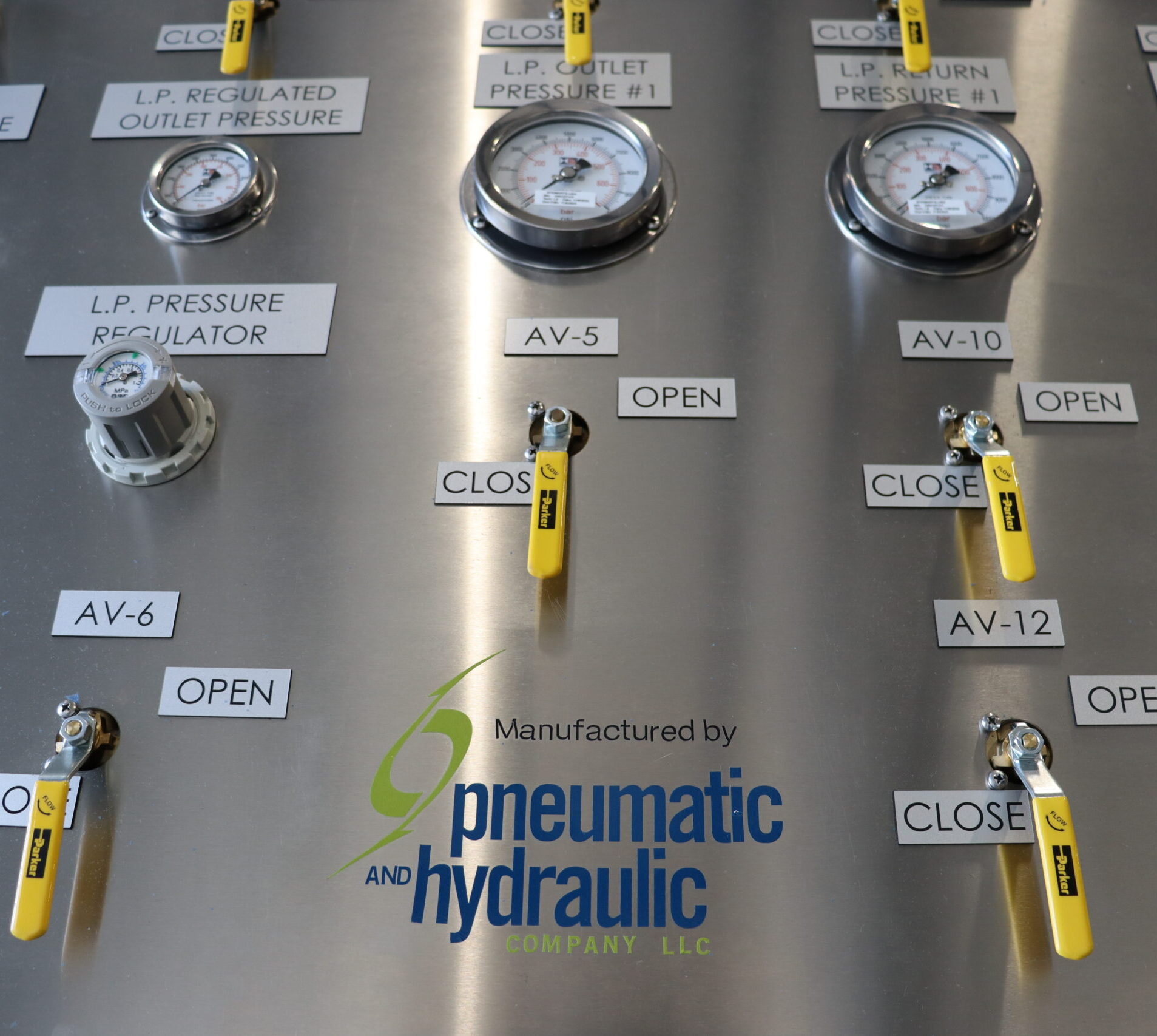
The project demonstrated PHC’s ability to function as an extension of a customer’s engineering organization, combining collaborative engineering, turnkey execution and high-pressure system expertise to deliver a flexible testing platform capable of supporting both current propulsion validation requirements and future operational expansion.
PROJECT SCOPE
The aerospace company required a custom-engineered helium booster and control system to support proof testing associated with lunar propulsion applications. The project involved creating a safe and repeatable testing platform capable of remotely controlling and regulating helium pressures up to 15,000 PSI while maintaining precise control, operational flexibility and repeatable performance under demanding testing conditions.
Because lunar propulsion systems require extensive validation before deployment, the system needed to operate reliably under demanding testing conditions while supporting extensive repetitive, documentable validation procedures.
As the customer’s testing requirements evolved throughout the project, PHC worked collaboratively with its engineering team to refine the system design, evaluate engineering revisions and incorporate changing operational requirements. This collaborative approach enabled the project to progress from initial concept through final implementation while maintaining schedule continuity and ensuring the finished system aligned with the customer’s long-term testing objectives.
The project introduced several operational and engineering requirements:
- High-pressure helium boosting and regulation
- Manual and remote operation capability
- Integrated pneumatic and electrical controls
- Multiple outlet and return circuits
- Safety relief systems and pressure monitoring
- Compact mobile packaging suitable for laboratory and aerospace environments
- Clean system layout with operator accessibility and serviceability
- Repeatable, documentable testing capability for propulsion validation
-
The environment also introduced several project challenges:
- New propulsion testing initiative with evolving requirements
- Requirement for repeated high-pressure testing cycles
- Complex tubing, valve routing and packaging constraints
- Need for safe operation within aerospace testing environments
- Limited availability of existing off-the-shelf solutions capable of meeting requirements
TURNKEY SOLUTION
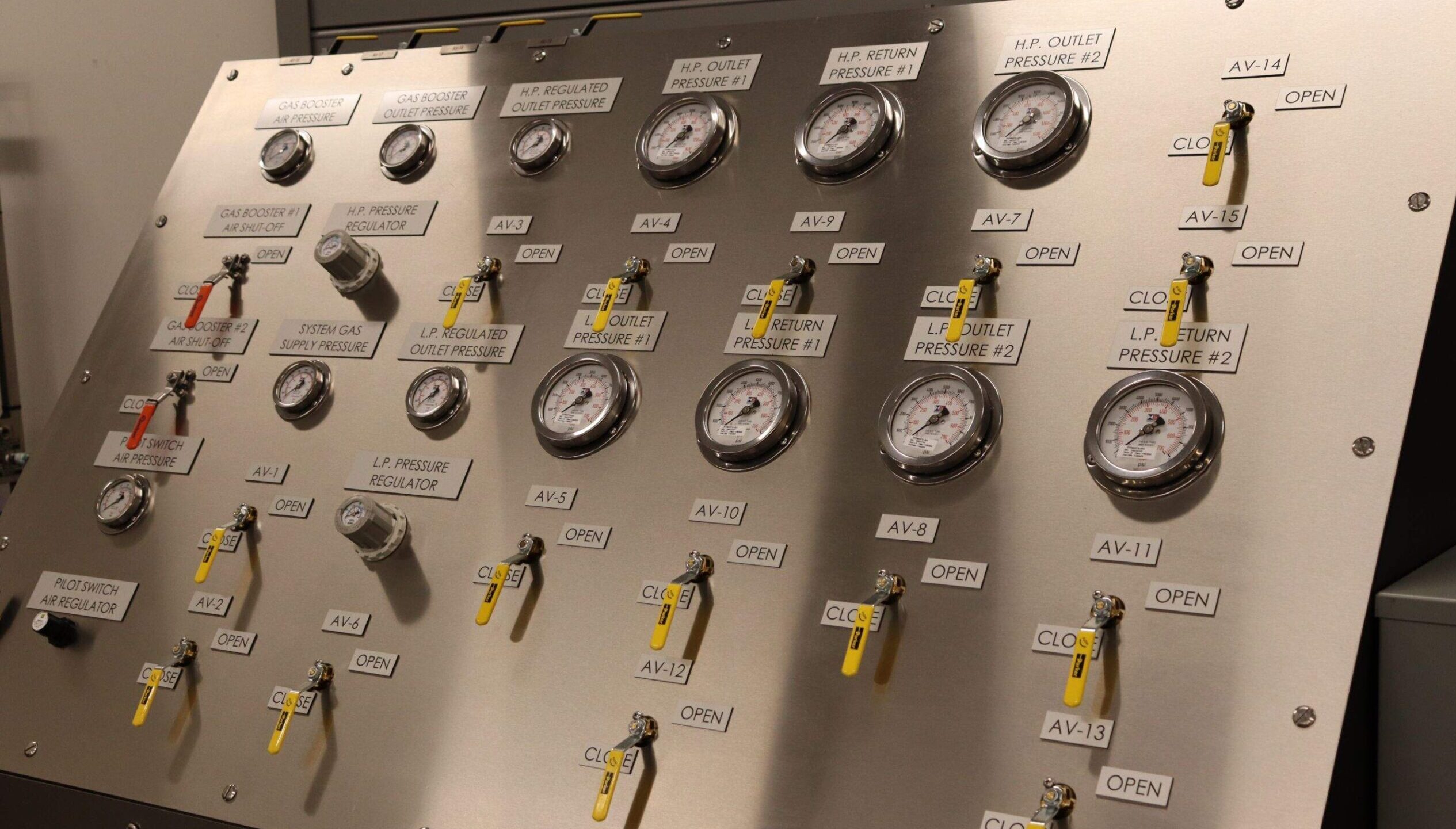
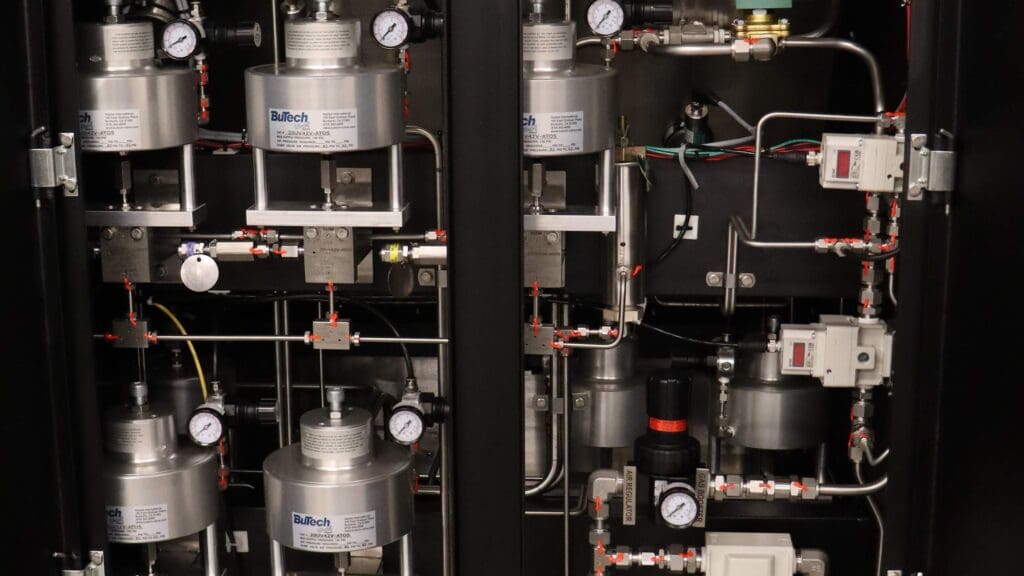
PHC engineered and delivered a fully integrated helium booster and control system designed specifically for the customer’s propulsion proof-testing requirements. Serving as both the engineering partner and system integrator, PHC coordinated the project’s mechanical, pneumatic, electrical and controls disciplines into a single turnkey solution, allowing the customer to focus on advancing its propulsion testing program rather than managing multiple vendors.
The turnkey solution included:
- Dual Haskel AGT-62/152 gas boosters
- Manual and remote control capability
- Integrated pressure regulation and monitoring
- Modular skid-mounted system design
- Customer PLC control input compatibility
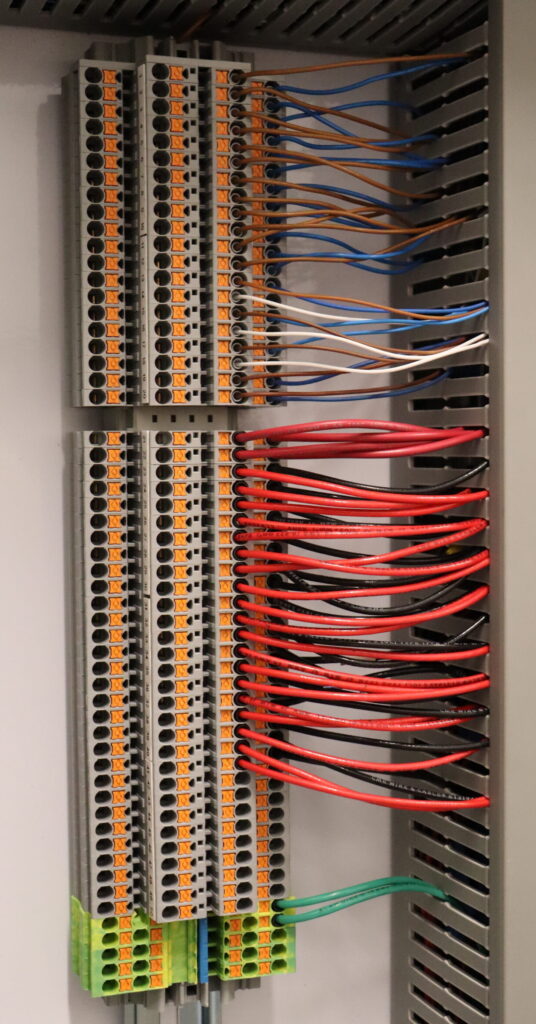
- Electrical terminal enclosure
- Integrated safety relief systems and gas filtration
- High-pressure and low-pressure outlet circuits
- Pneumatic valve banks
To support safe and reliable operation, the system incorporated pressure transmitters, electronic pressure monitoring, multiple pressure relief valves, manual bypass and control capability, and integrated air regulation and filtration systems.
The project combined high-pressure gas handling, pneumatic controls, electrical integration, pressure regulation and mobile packaging into a single turnkey aerospace testing platform.
PHC spearheaded engineering, fabrication, controls integration, purchasing and assembly in-house, consolidating multiple engineering disciplines into a single coordinated turnkey solution while maintaining schedule continuity throughout the project lifecycle.
Rather than assembling standard components, PHC engineered the system as a fully integrated platform optimized for safety, operator usability, serviceability and long-term reliability under demanding aerospace testing conditions.
ENGINEERING & IMPLEMENTATION
Developing the system required significantly more than equipment fabrication. PHC worked as an extension of the customer’s engineering organization throughout the project, collaborating through multiple design reviews and engineering iterations to transform evolving propulsion testing requirements into a manufacturable, high-pressure helium booster and control system.
The project required balancing compact system packaging with operator accessibility, safety spacing, serviceability and complex tubing and valve routing.
Because the customer’s testing objectives continued to evolve throughout the project, PHC incorporated multiple engineering revisions while maintaining schedule continuity and preserving the system’s overall performance objectives. This collaborative engineering approach enabled both organizations to refine the design without compromising safety, manufacturability or future expandability.
Key implementation activities included:
- Custom Engineering and Design: PHC developed custom pneumatic schematics, electrical enclosure layouts, valve integration strategies and high-pressure tubing routing configurations tailored specifically to the customer’s testing environment. Each design review further refined the system layout to improve accessibility, simplify maintenance and ensure the platform could accommodate evolving operational requirements.
- Safety and Pressure Management: The project required extensive engineering related to high-pressure helium service, pressure relief valve tuning, system safety reviews and operational reliability under repeated testing conditions. Because the system would routinely operate at pressures approaching 15,000 PSI, safety considerations influenced virtually every aspect of the design, from component selection and pressure management to operator controls and system monitoring.
- Integrated Controls and Flexibility: The system was designed with both manual and future remote operation capability. Although the initial implementation operated manually, the platform was engineered to support future customer-side automation, remote control integration and expanded programming functionality as operational requirements evolved. Designing for future automation protected the customer’s investment by allowing the testing platform to evolve without requiring significant system redesign.
- Design Adaptability: As testing requirements evolved, PHC incorporated customer-driven revisions including layout changes, valve additions, remote control functionality updates and mobile system configuration adjustments. The ability to respond quickly to changing requirements while maintaining engineering quality and project momentum became one of the defining characteristics of the engagement.
PROJECT TIMELINE
The project spanned approximately 18 months, reflecting the complexity of the application and the collaborative engineering process required to develop a highly customized aerospace testing platform. Throughout the engagement, PHC worked alongside the customer’s engineering team to refine the design as testing requirements evolved while maintaining project continuity.
September 2023: Approximate FRQ received
Late-2023–2024: Collaborative engineering, design and multiple customer-driven revisions
October 2024: Final bill of materials completed and released for procurement
Late-2024: Fabrication, assembly and system integration
February 2025: System delivered and commissioned
OUTCOMES
PHC successfully delivered a custom integrated helium booster and control system capable of supporting the customer’s demanding propulsion proof-testing applications.
Turnkey execution: PHC delivered complete system engineering, fabrication, controls integration and assembly within a single coordinated solution.
Repeatable testing capability: The system provided safe, repeatable high-pressure helium testing capability for propulsion validation and related testing applications.
Improved operational flexibility: Integrated manual and remote operation capability supported evolving testing and automation requirements.
Reduced system complexity: The custom platform consolidated pneumatic, pressure regulation and control functions into a single integrated mobile system.
Enhanced operator safety: Integrated monitoring, pressure relief and control systems improved operational safety and control during high-pressure testing activities.
Expanded testing capability: The system supported additional testing applications beyond the original propulsion proof-testing scope, increasing long-term operational flexibility across evolving aerospace testing initiatives.
This project demonstrates PHC’s ability to engineer aerospace-quality integrated systems for highly specialized testing environments and demanding operational requirements.
Pneumatic & Hydraulic Company supports aerospace, industrial and advanced manufacturing operations with turnkey engineered systems designed for high-pressure applications, integrated controls and demanding operating environments. From propulsion testing and gas handling to automation and custom fluid power systems, PHC delivers integrated solutions focused on reliability, safety and operational performance across mission-critical applications.